
A Comprehensive Specification Guide for Landscape Architects, Lighting Designers, and Electrical Contractors.
Designing an exceptional outdoor environment requires far more than simply placing fixtures in a garden—it demands a deliberate balance between visual drama, precise optical control, and long-term durability against harsh
environmental elements. Whether illuminating a luxury commercial development, a resort pathway, or a modern residential estate, professional landscape lighting elevates outdoor architecture while ensuring safety, functionality, and sustained performance.
This comprehensive guide breaks down essential specification criteria—from selecting appropriate IP and IK ratings to mastering optics and thermal management—ensuring your outdoor lighting concepts deliver flawless visual impact and uncompromised longevity year after year.
1. The Aesthetics: Layering light in Outdoor spaces |
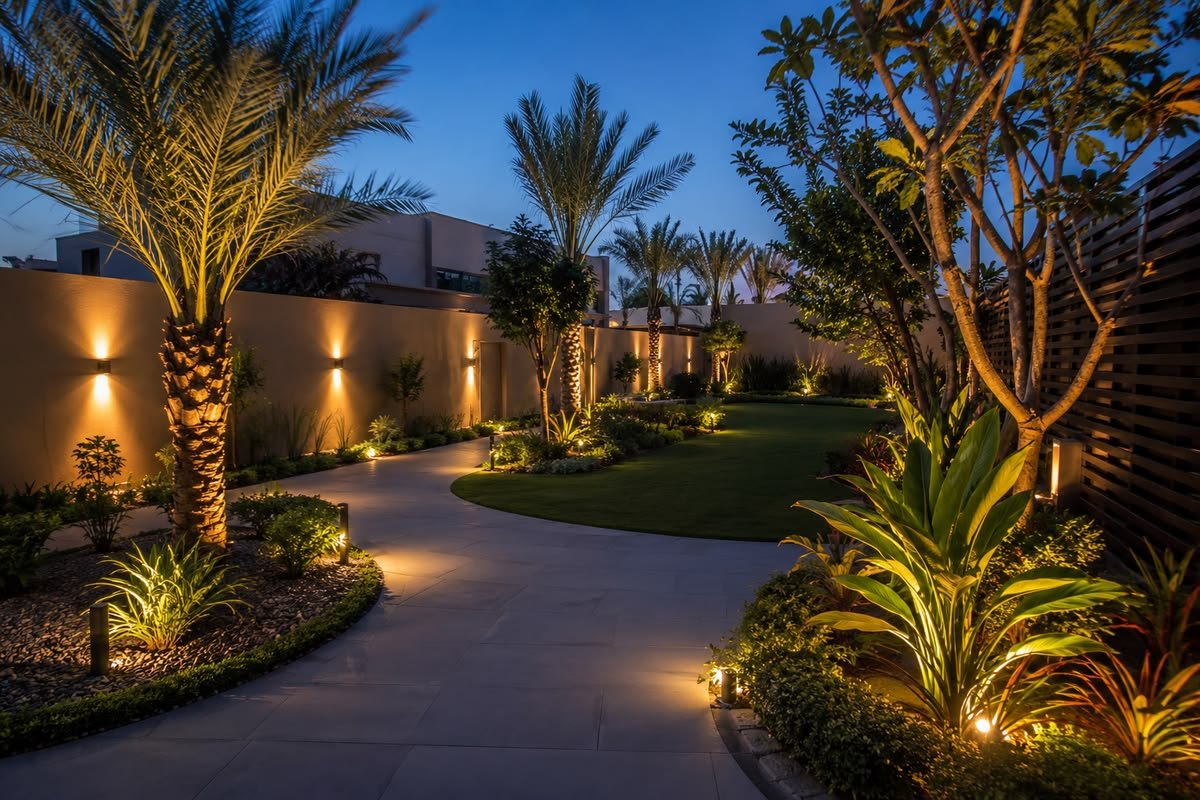
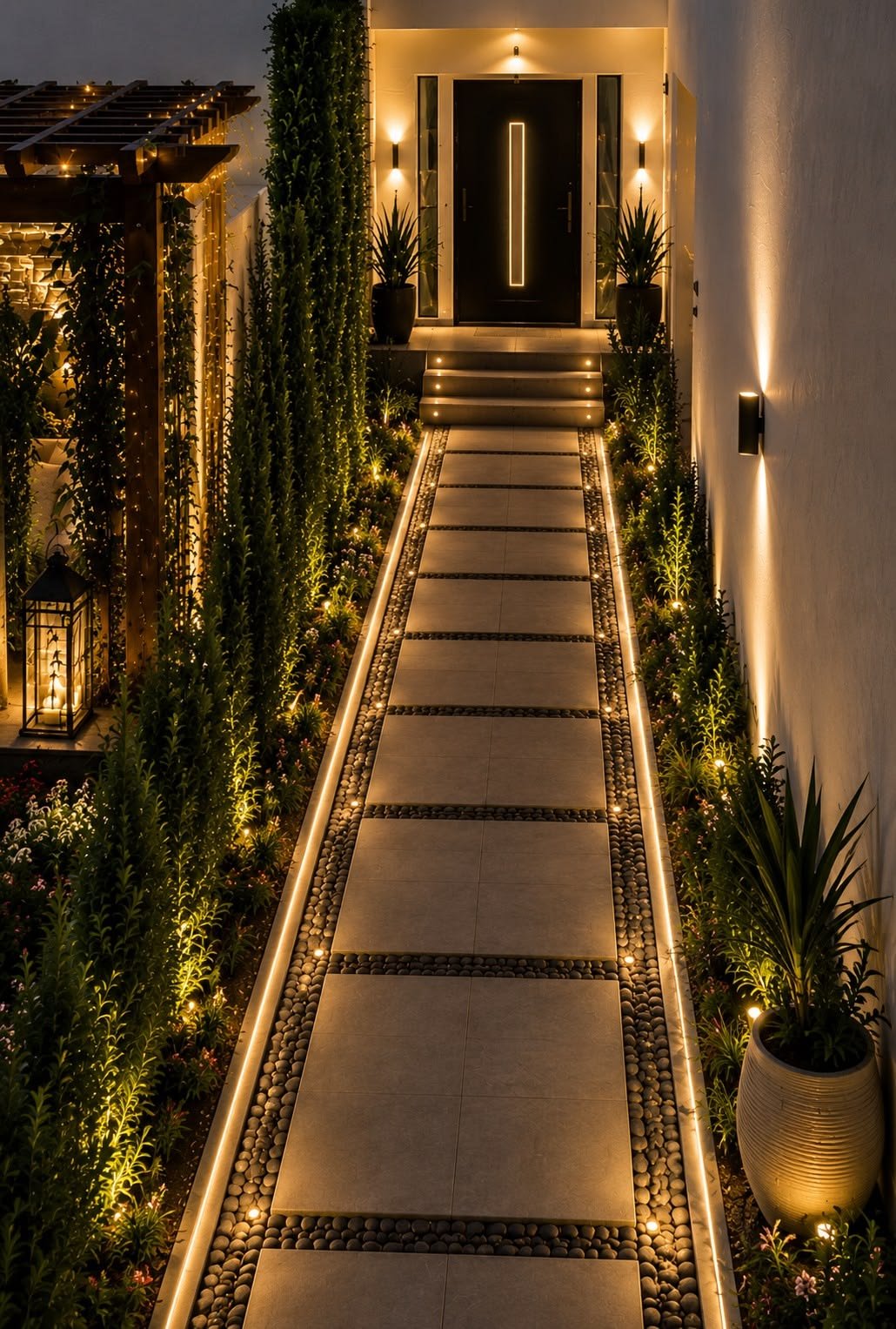
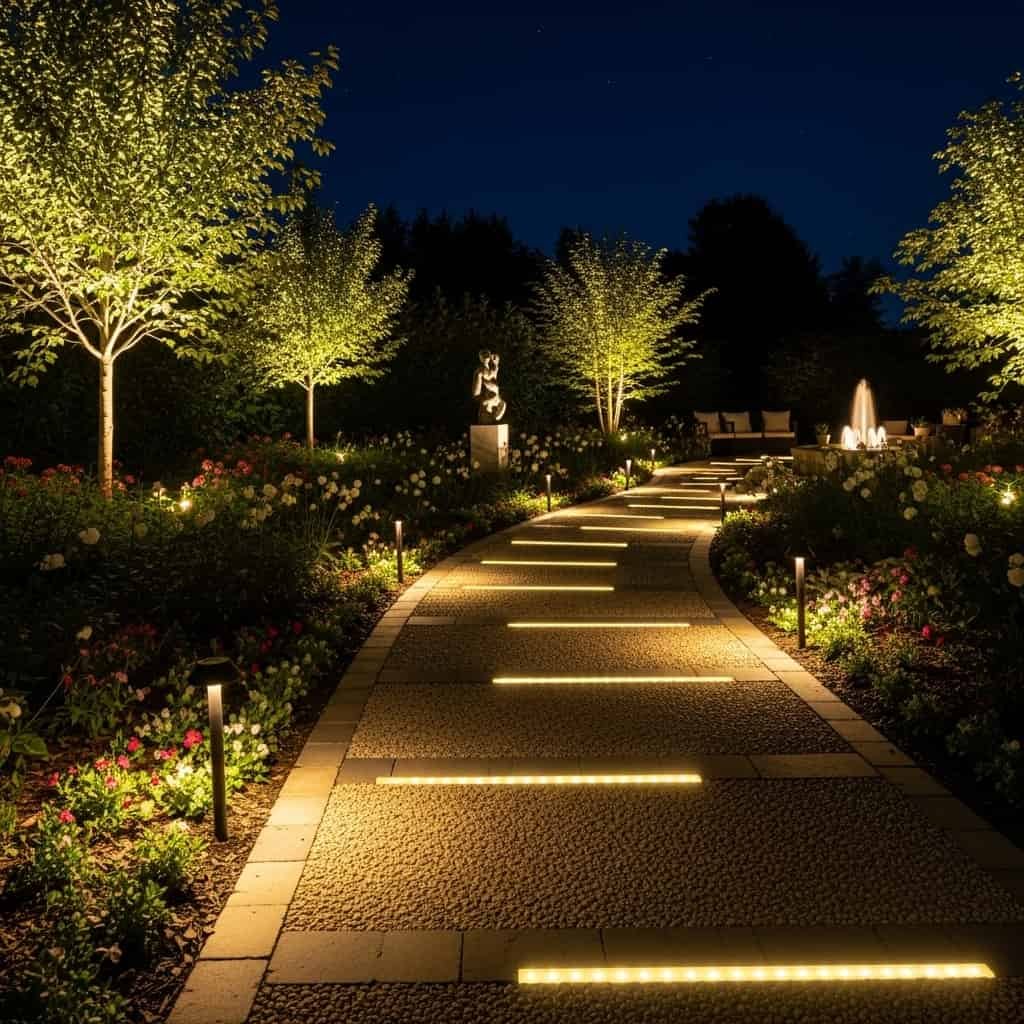
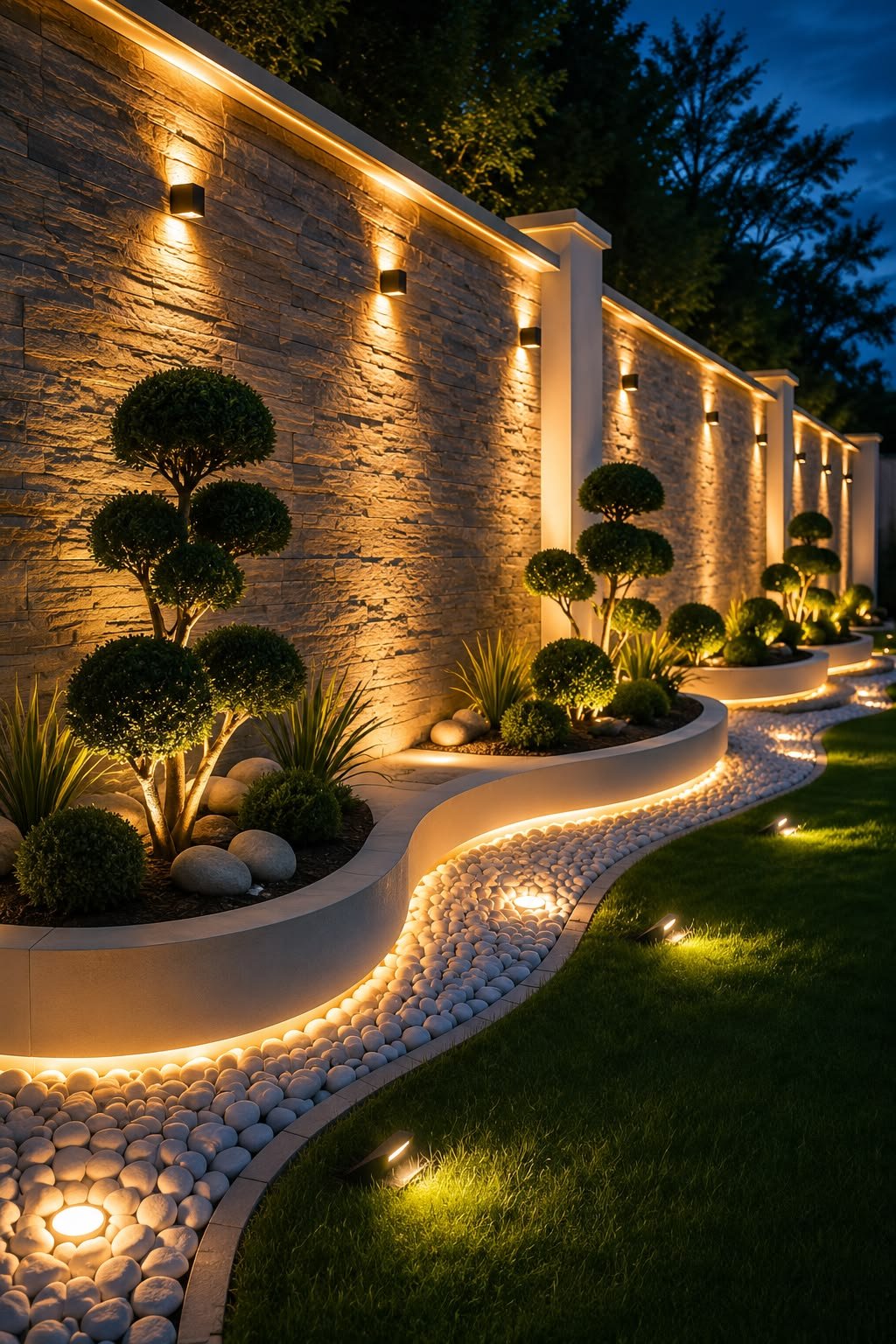
A successful landscape lighting scheme avoids uniform, high-glare illumination. Instead it relies on layering three core lighting types to build depth, visual balance and contrast across different landscape planes:
•Ambient Lighting: Establishes soft background illumination across broad zones, such as courtyards or open lawns, using wide-angle floodlights or low-glare post-tops.
•Task Lighting: Ensures functional visibility along high-traffic areas, step treads, and pathways using recessed step lights, low-voltage bollards or linear underground channels.
•Accent Lighting: Highlights focal points—such as architectural features, sculptures, or mature trees—using adjustable spike spotlights or ground recessed uplights.
Color Temperature & Color Accuracy
For natural vegetation, timber, and stone, select a warm color temperature between 2700K and 3000K. This enhances natural hues without introducing harsh blue tones. Ensure fixtures maintain a high Color Rendering Index (CRI ≥ 80, OR CRI ≥ 90 for key architectural features) to accurately preserve the true palette of flora and natural materials after dark.
2. The Optics: Precision Control and Glare Reduction |
In outdoor environments, unshielded light sources cause uncomfortable glare and unwanted light trespass. Achieving high-end architectural results requires selecting fixtures with engineered optical systems and tailored beam angles.
| Application | Beam Angle Range | Key Optical & Accessory Features |
|---|---|---|
| Tree & Palm Uplighting | 15 ° – 30° Narrow | Honeycomb louver, deep-set COB light engine, glare shield |
| Facade & Wall Washing | 45° x 90° Asymmetric | Oval/asymmetric optic, frosted linear diffuser |
| Pathway & Edging | 90° – 120° Wide | Forward-throw lens, anti-glare visor, optical louvers |
Key Optical Considerations :
Outdoor luminaries operate under demanding conditions, including rain, high humidity, extreme temperature swings, irrigation spray, and physical impacts. Specifying the correct technical standards ensures zero moisture ingress and decades of reliable operation.
•Ingress Protection (IP Ratings):
◦IP65: Suitable for wall-mounted, exposed surface fixtures protected against rain and water jets.
◦IP67: Mandatory for ground-recessed uplights and spikelights subject to temporary flooding, heavy soil moisture, and heavy rainfall.
◦IP68: Essential for continuous underwater submersion, such as in fountains, pools, and aquatic features.
•Impact & Housing Materials: Specify IK08 to IK10 rated housings for ground-recessed fixtures in high-foot-traffic or maintenance zones. Premium housing materials—such as CNC-machined anodized aluminum, 316 marine-grade stainless steel, or solid die-cast brass—prevent corrosion and structural degradation over time.
•Thermal Management: Ensure fixtures feature integrated high-grade aluminum heat sinks to maintain low junction temperatures, protecting LED chips from thermal degradation and color shifting.
4.Technical Specification Summary |
| Specification Parameter | Recommended Architectural Standard |
|---|---|
| Operating Voltage | 12V / 24V DC (Low-Voltage Safety) or 220–240V AC Mains |
| Color Temperature (CCT) | 2700K Warm White / 3000K Neutral Warm |
| Color Accuracy (CRI) | Ra ≥ 80 (Ra ≥ 90 for premium focal features) |
| Ingress Protection (IP) | Minimum IP65 (Ground-recessed: IP67, Underwater: IP68) |
| Impact Resistance (IK) | IK08 – IK10 (for ground-recessed and high-traffic areas) |
| Material Construction | Die-cast / Anodized Aluminium, 316 Stainless Steel, Solid Brass |